

(Insight)
Robotics + AI: From “Perception and Control” to “Embodied Intelligence”
Robotics + AI: From “Perception and Control” to “Embodied Intelligence”
Design Tips
Design Tips
Feb 2, 2026
(Insight)
Robotics + AI: From “Perception and Control” to “Embodied Intelligence”
Design Tips
Feb 2, 2026
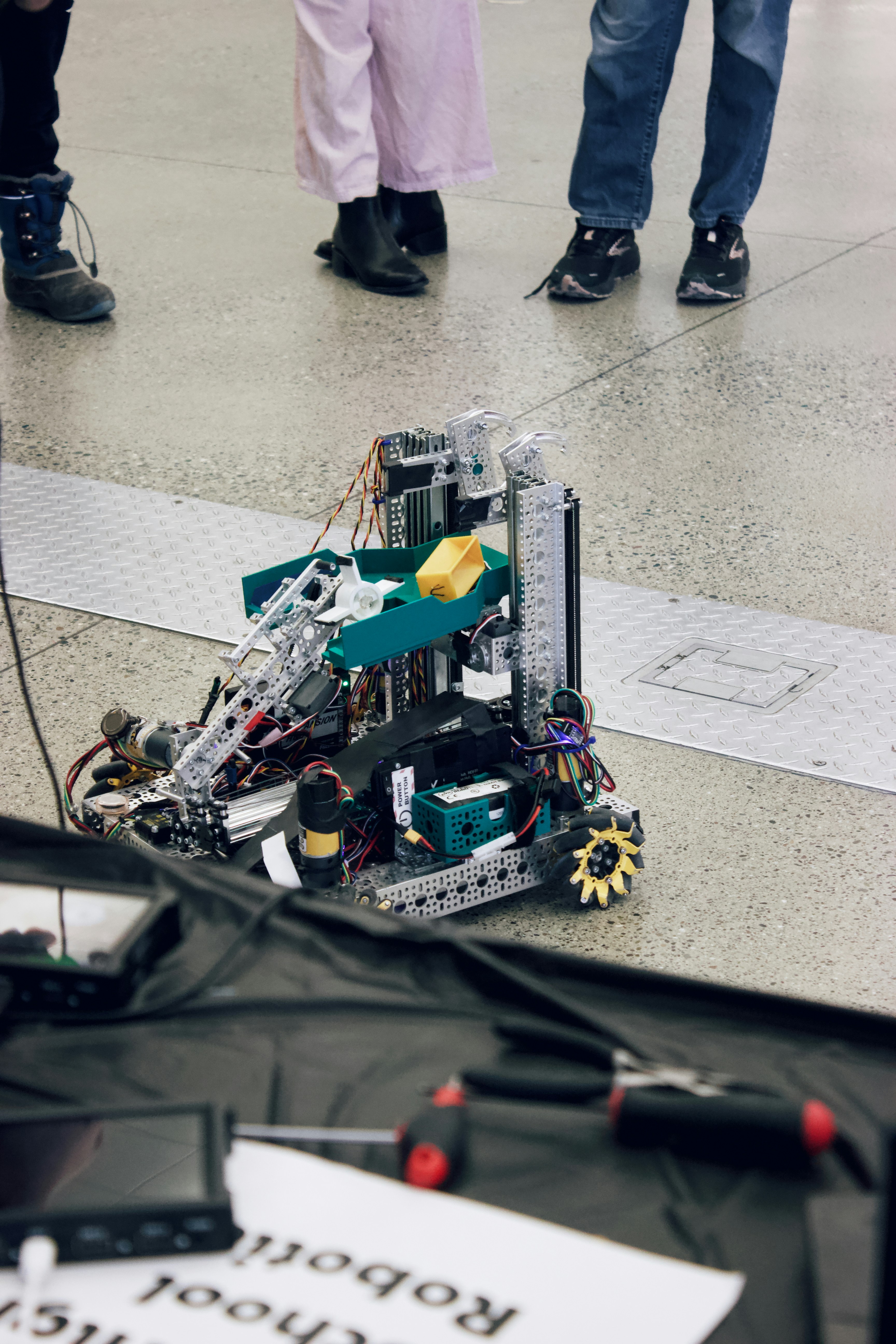
Robotics is entering a new phase where perception models, language models, and reinforcement learning are being fused into systems that can interpret messy environments and respond with flexible behavior. Instead of hand-coding every edge case, teams are training robots to generalize: identify objects under different lighting, adapt to new layouts, and recover from mistakes. This doesn’t eliminate classical robotics—kinematics, control theory, safety constraints are still foundational—but it changes the balance. AI handles uncertainty and variability; classical methods guarantee stability and safety. The most capable systems combine both: learning for perception and decision-making, deterministic constraints for motion and safety.
The practical bottleneck is not “can the model understand the world?” but “can we train reliably at scale?” Robotics data is expensive, and real-world trial-and-error can be dangerous. That’s why simulation is exploding: you can generate millions of varied scenarios, randomize textures and physics, and train policies that later transfer to reality. But sim-to-real is still hard. The best strategies use hybrid datasets: simulation for breadth, real data for grounding, and self-supervised learning to absorb unlabeled sensor streams. Another major trend is “behavior cloning + correction”: start by imitating good demonstrations, then use learning to refine and handle rare cases, with safety supervisors catching risky actions.
In the next wave, “robotic agents” will feel more like adaptable workers than single-purpose machines. A warehouse robot won’t just pick items; it will understand instructions, ask clarifying questions, and update its plan when aisles are blocked. A service robot won’t just navigate; it will coordinate with humans and other machines. But safety and accountability will define adoption. Expect strict operational envelopes, continuous monitoring, and “explainable action logs” that record why the robot did what it did. The winners will be the teams that treat robotics as an end-to-end product: data pipeline, training pipeline, deployment pipeline, and safety pipeline—because embodied intelligence is as much about operations as it is about algorithms.
Robotics is entering a new phase where perception models, language models, and reinforcement learning are being fused into systems that can interpret messy environments and respond with flexible behavior. Instead of hand-coding every edge case, teams are training robots to generalize: identify objects under different lighting, adapt to new layouts, and recover from mistakes. This doesn’t eliminate classical robotics—kinematics, control theory, safety constraints are still foundational—but it changes the balance. AI handles uncertainty and variability; classical methods guarantee stability and safety. The most capable systems combine both: learning for perception and decision-making, deterministic constraints for motion and safety.
The practical bottleneck is not “can the model understand the world?” but “can we train reliably at scale?” Robotics data is expensive, and real-world trial-and-error can be dangerous. That’s why simulation is exploding: you can generate millions of varied scenarios, randomize textures and physics, and train policies that later transfer to reality. But sim-to-real is still hard. The best strategies use hybrid datasets: simulation for breadth, real data for grounding, and self-supervised learning to absorb unlabeled sensor streams. Another major trend is “behavior cloning + correction”: start by imitating good demonstrations, then use learning to refine and handle rare cases, with safety supervisors catching risky actions.
In the next wave, “robotic agents” will feel more like adaptable workers than single-purpose machines. A warehouse robot won’t just pick items; it will understand instructions, ask clarifying questions, and update its plan when aisles are blocked. A service robot won’t just navigate; it will coordinate with humans and other machines. But safety and accountability will define adoption. Expect strict operational envelopes, continuous monitoring, and “explainable action logs” that record why the robot did what it did. The winners will be the teams that treat robotics as an end-to-end product: data pipeline, training pipeline, deployment pipeline, and safety pipeline—because embodied intelligence is as much about operations as it is about algorithms.
ABOUT
ABOUT
MORE INSIGHTS
MORE INSIGHTS
MORE INSIGHTS
Hungry for more? Here's some more articles you might enjoy, authored by our talented team.
Hungry for more? Here's some more articles you might enjoy, authored by our talented team.
Hungry for more? Here's some more articles you might enjoy, authored by our talented team.

The “AI Operating Model”: How Teams, Process, and Governance Are Changing
Feb 2, 2026
The “AI Operating Model”: How Teams, Process, and Governance Are Changing
Feb 2, 2026
Multi-Modal AI: When Text, Vision, Audio, and Actions Converge
Feb 2, 2026
Multi-Modal AI: When Text, Vision, Audio, and Actions Converge
Feb 2, 2026

Autonomous Data Operations: Treating Data Drift as a First-Class Incident
Feb 2, 2026
Autonomous Data Operations: Treating Data Drift as a First-Class Incident
Feb 2, 2026