

Demo For News
Demo For News
Design Tips
Design Tips
Feb 2, 2026
Demo For News
Design Tips
Feb 2, 2026

The AI world is pushing organizations to adopt a new operating model. Instead of shipping static software features, teams now ship behaviors—systems that can vary output and adapt over time. This changes how you plan work, measure success, and manage risk. The best teams create “behavior contracts”: what the system is allowed to do, what it must never do, how it should respond under uncertainty, and what evidence it should provide (citations, logs, confirmations). AI becomes a governed capability, not a one-off experiment.
Process-wise, high-performing teams build “prompt and policy repositories,” evaluation suites, and model change management. They track versions of prompts and tool definitions like code, require reviews for risk-sensitive changes, and run regression tests on curated datasets. They also create incident response playbooks for AI failures: hallucinations in production, unsafe outputs, cost spikes, latency degradation, or tool misuse. This is the operational maturity that turns a demo into a dependable product. The AI operating model treats reliability as a feature and governance as an accelerator rather than a brake.
Over the next couple of years, this will become standard across industries. Organizations will separate “innovation tracks” (rapid prototyping) from “production tracks” (strict evaluation and governance), while sharing common infrastructure for logging, testing, and policy enforcement. Leaders will ask for dashboards that show quality and risk, not just model names. Teams will invest in data curation and evaluation as much as model selection. The result is an AI world where doing things “the new way” means building systems that can learn and change—without losing control.
The AI world is pushing organizations to adopt a new operating model. Instead of shipping static software features, teams now ship behaviors—systems that can vary output and adapt over time. This changes how you plan work, measure success, and manage risk. The best teams create “behavior contracts”: what the system is allowed to do, what it must never do, how it should respond under uncertainty, and what evidence it should provide (citations, logs, confirmations). AI becomes a governed capability, not a one-off experiment.
Process-wise, high-performing teams build “prompt and policy repositories,” evaluation suites, and model change management. They track versions of prompts and tool definitions like code, require reviews for risk-sensitive changes, and run regression tests on curated datasets. They also create incident response playbooks for AI failures: hallucinations in production, unsafe outputs, cost spikes, latency degradation, or tool misuse. This is the operational maturity that turns a demo into a dependable product. The AI operating model treats reliability as a feature and governance as an accelerator rather than a brake.
Over the next couple of years, this will become standard across industries. Organizations will separate “innovation tracks” (rapid prototyping) from “production tracks” (strict evaluation and governance), while sharing common infrastructure for logging, testing, and policy enforcement. Leaders will ask for dashboards that show quality and risk, not just model names. Teams will invest in data curation and evaluation as much as model selection. The result is an AI world where doing things “the new way” means building systems that can learn and change—without losing control.
ABOUT
ABOUT
MORE INSIGHTS
MORE INSIGHTS
MORE INSIGHTS
Hungry for more? Here's some more articles you might enjoy, authored by our talented team.
Hungry for more? Here's some more articles you might enjoy, authored by our talented team.
Hungry for more? Here's some more articles you might enjoy, authored by our talented team.
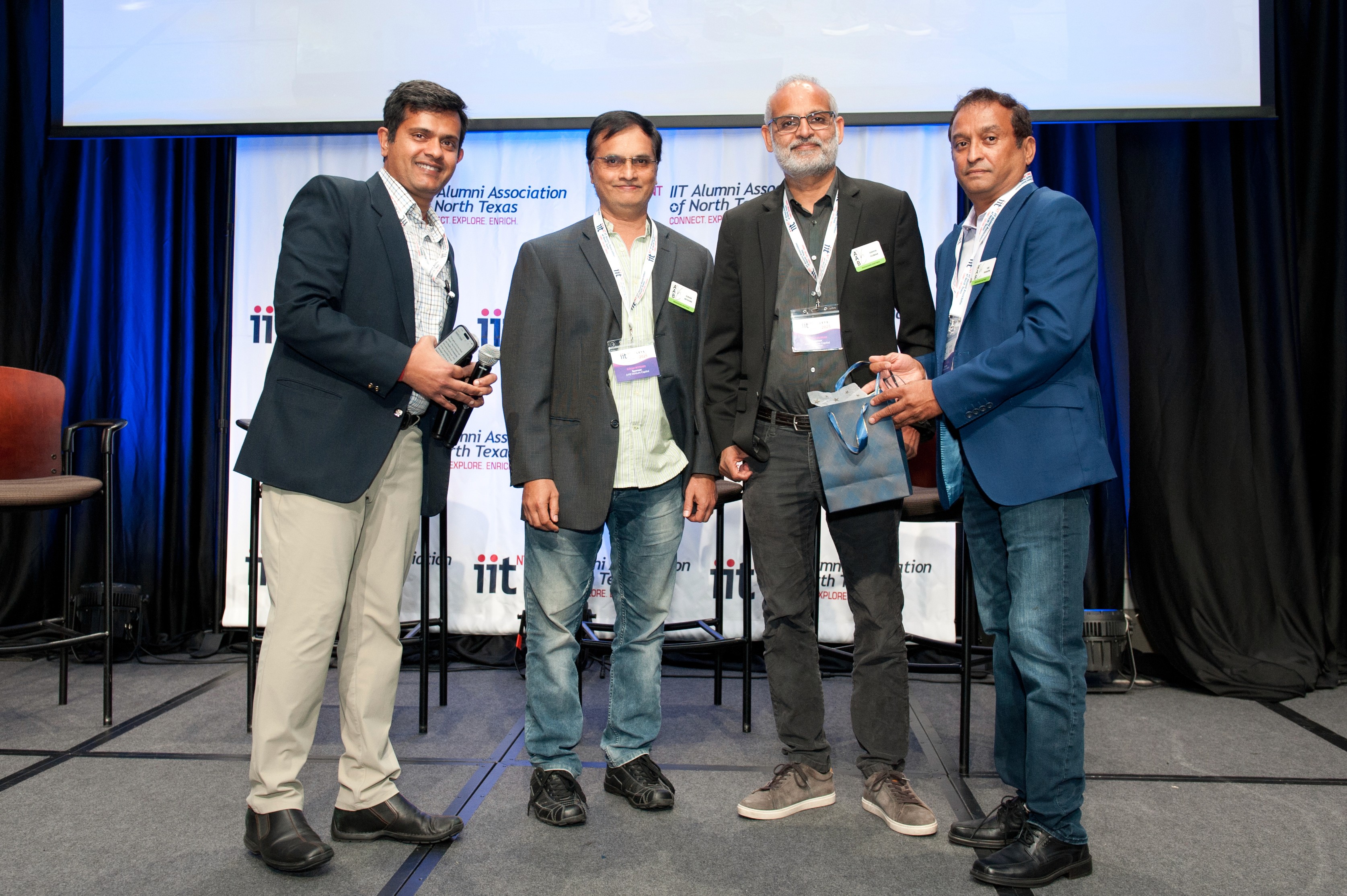
Catalyst-X Founder Ashok Kumar at Innovation Initiative at IIT NT’s “Let’s Talk 2025,” Supported by AAB Venture Capital
Sep 30, 2025
Catalyst-X Founder Ashok Kumar at Innovation Initiative at IIT NT’s “Let’s Talk 2025,” Supported by AAB Venture Capital
Sep 30, 2025

Demo 9th Feb
Feb 9, 2026
Demo 9th Feb
Feb 9, 2026